
Hyundai Plant ICE Raid: Georgia Immigration Enforcement and Auto Industry Impact
Executive Summary: The recent Immigration and Customs Enforcement (ICE) raid at Hyundai's electric vehicle battery plant in Georgia has ignited a nationwide debate on immigration policy, labor practices, and the future of American automotive manufacturing. This comprehensive analysis examines the multifaceted implications of the operation that resulted in the detention of over 400 workers, exploring its immediate impact on production timelines, the broader consequences for the EV supply chain, and the ongoing legal and political debates surrounding immigration enforcement and worker rights. As the automotive industry navigates its transition to electric vehicles, this event highlights the complex interplay between immigration policy, labor markets, and industrial strategy.

Hyundai's Georgia battery plant - site of recent ICE enforcement action
The ICE Operation: Scope and Immediate Consequences
The ICE raid at Hyundai's Georgia battery manufacturing facility represents one of the largest workplace immigration enforcement actions in recent years. Conducted in the early hours of a weekday morning, the operation involved approximately 200 federal agents who secured the facility and screened workers' documentation. The enforcement action resulted in the detention of over 400 employees, representing approximately 40% of the plant's workforce.
Key Details of the ICE Raid
- Location: Hyundai's Metaplant America facility in Bryan County, Georgia
- Facility significance: $5.5 billion investment, slated to employ 8,100 workers
- Enforcement scope: One of largest workplace raids in past decade
- Workforce impact: 400+ detainments, representing ~40% of onsite workforce
- Timeline: Production halted indefinitely pending resolution
- Legal basis: Investigation into alleged documentation fraud
The immediate effect of the ICE raid has been a complete halt to production at the critical battery production facility. Project managers estimate that each day of delayed production costs approximately $3.2 million in direct expenses and potential lost future revenue. The disruption comes at a particularly sensitive time for Hyundai's electric vehicle ambitions, as the company plans to launch several new EV models reliant on batteries produced at this facility beginning in late 2026.

Electric vehicle production line - dependent on battery manufacturing facilities
Broader Implications for the Automotive Industry
The ICE raid has exposed vulnerabilities in the complex supply chains supporting electric vehicle production in the United States. The Hyundai facility represents a cornerstone of the industry's strategy to onshore battery production, reducing dependence on foreign suppliers particularly in Asia. With production delays resulting from the ICE action, automakers face potential disruptions to carefully coordinated production schedules and vehicle launch timelines.
"The timing of this enforcement action couldn't be worse for the industry. We're facing a critical period where battery production capacity needs to come online to meet both consumer demand and regulatory requirements. Disruptions at one facility create ripple effects throughout the entire ecosystem." — Automotive Industry Analyst
The ICE raid highlights the tension between immigration enforcement priorities and economic development goals. States like Georgia have actively courted foreign investment in advanced manufacturing through significant incentive packages, while simultaneously implementing policies that potentially constrain the workforce available for such projects. The current situation creates uncertainty for other manufacturers considering similar investments in the United States.
| Automaker | Planned EV Models | Potential Impact from Delay | Contingency Plans |
|---|---|---|---|
| Hyundai | Ioniq 7, Genesis EV SUV | 6-9 month potential delay | Increased imports from Korea |
| Kia | EV9, EV5 | 3-6 month potential delay | Diversifying battery sourcing |
| General Motors | Equinox EV, Silverado EV | Limited direct impact | Utilizing Ultium platform flexibility |
| Ford | F-150 Lightning, Explorer EV | Minimal direct impact | BlueOval battery park capacity |
Labor Market and Immigration Policy Implications
The ICE raid has significant implications for labor markets and ongoing debates about immigration policy. The operation has highlighted the dependence of certain industries on immigrant labor and raised questions about the appropriate balance between enforcement and economic needs.
Labor Market Considerations
- Workforce shortages: Many industries face challenges finding workers for skilled positions
- Training gaps: Limited domestic workforce with required technical skills
- Geographic mismatches: Available workers not located near manufacturing centers
- Wage pressures: Potential increases as employers compete for limited workers
- Automation acceleration: Increased investment in robotics to reduce labor dependence
The situation has reignited debates about comprehensive immigration reform and the need for legal pathways to address workforce shortages. Business groups have called for reforms that would allow them to legally hire needed workers while maintaining appropriate border security. Meanwhile, labor advocates have raised concerns about potential exploitation of immigrant workers and called for stronger protections regardless of immigration status.
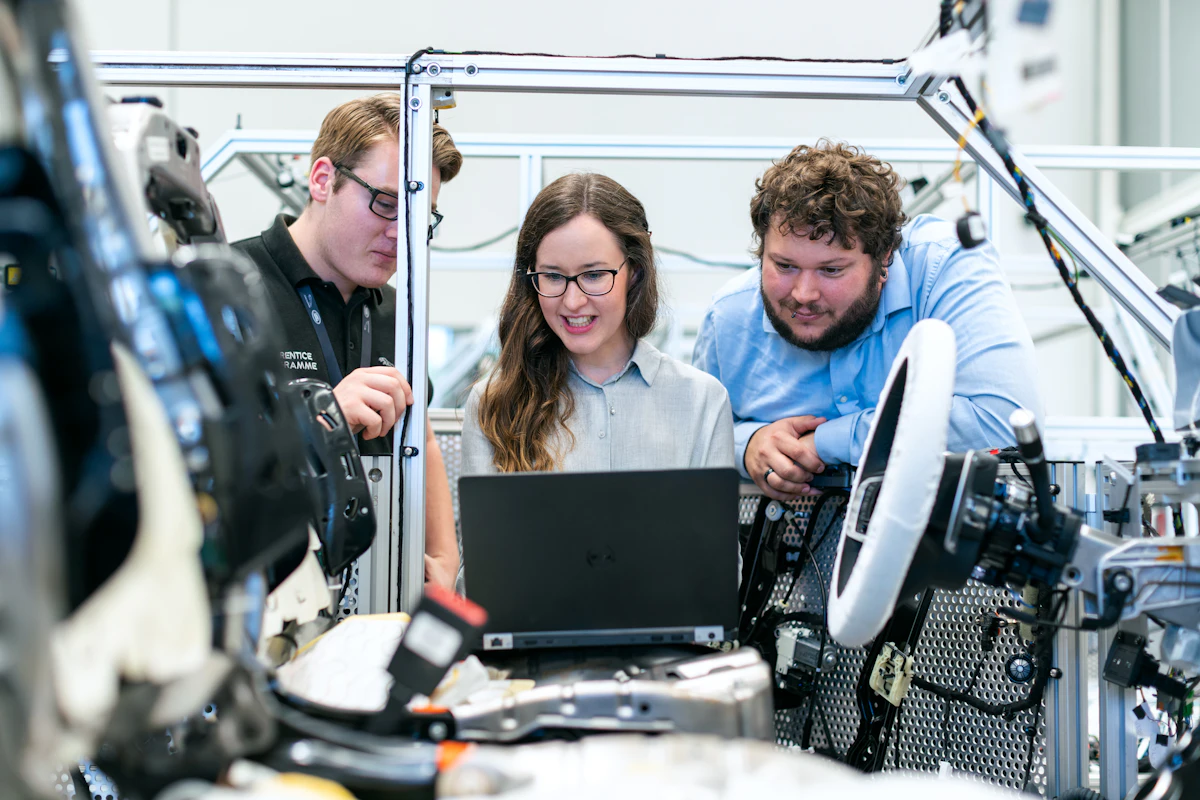
Automotive manufacturing workforce - facing challenges after ICE enforcement actions
Political and Policy Responses
The ICE raid has triggered significant political responses at local, state, and federal levels. The operation has become a flashpoint in broader debates about immigration policy, federalism, and economic development.
Key political developments following the raid include:
- Congressional hearings: Multiple committees have announced investigations into the operation
- State legislation: Georgia lawmakers considering bills to address workforce issues
- Legal challenges: Advocacy groups filing suits regarding enforcement methods
- Administrative review: Federal agencies examining enforcement priorities
- International diplomacy: Discussions with foreign governments about affected workers
The Biden administration faces pressure from both sides of the immigration debate, with some groups calling for stricter enforcement while others advocate for more lenient policies focused on economic needs. The situation highlights the challenges of balancing competing priorities in immigration policy.
Key Policy Questions Raised
The raid has prompted examination of several policy issues:
- How should immigration enforcement priorities be balanced with economic needs?
- What reforms are needed to address workforce shortages in critical industries?
- How can worker protections be strengthened regardless of immigration status?
- What role should states play in immigration enforcement?
- How can businesses ensure compliance with complex immigration laws?
Economic Impact and Supply Chain Considerations
The economic implications of the ICE raid extend far beyond the immediate facility, affecting supply chains, regional economies, and national industrial strategy. The disruption comes at a time when the United States is attempting to onshore critical components of the EV supply chain.
Economic Consequences
- Regional impact: Potential loss of thousands of direct and indirect jobs
- Investment uncertainty: Other companies may reconsider US manufacturing plans
- Consumer effects: Potential delays and price increases for electric vehicles
- Supplier networks: Companies throughout the supply chain affected by production halt
- Economic development: States may need to reassess recruitment strategies
The raid highlights the vulnerability of concentrated supply chains and the potential for single events to disrupt entire industries. Companies are likely to reassess their risk management strategies, potentially diversifying production across multiple facilities or countries to mitigate similar disruptions in the future.
For the EV transition specifically, the disruption could slow the adoption timeline as vehicle availability becomes constrained and prices potentially increase due to supply limitations. This could have implications for environmental goals and the broader transition away from internal combustion engines.
Legal and Ethical Considerations
The ICE raid has raised numerous legal and ethical questions about workplace enforcement practices, employer responsibilities, and worker rights. These considerations are likely to shape future enforcement approaches and business practices.
"While immigration enforcement is necessary, the method and scale of workplace raids raise serious questions about proportionality and collateral impact. There are less disruptive approaches that could achieve enforcement goals while minimizing economic damage." — Immigration Law Professor
Key legal and ethical issues include:
Legal and Ethical Questions
- Due process: Were detained workers afforded appropriate legal rights?
- Employer accountability: What responsibility does Hyundai bear for hiring practices?
- Humanitarian considerations: How were family separations and dependents handled?
- Selective enforcement: Why was this particular facility targeted?
- Transparency: What information should be publicly disclosed about enforcement operations?
These questions are likely to be addressed through ongoing litigation, congressional oversight, and potential policy changes. The outcomes could shape how immigration enforcement is conducted in workplace settings for years to come.
Future Outlook and Industry Adaptation
The long-term implications of the ICE raid will depend on how various stakeholders respond and adapt. The event is likely to accelerate several trends within the automotive industry and beyond.
Potential developments include:
- Increased automation: Companies may accelerate investments in robotics to reduce labor dependence
- Workforce development: Enhanced training programs to develop domestic workers with needed skills
- Compliance focus: Stricter verification systems and documentation processes
- Supply chain diversification: Spreading production across multiple facilities and regions
- Policy engagement: More active industry involvement in immigration policy debates
The event may also lead to reforms in how immigration enforcement is conducted, potentially focusing more on employer accountability rather than worker detentions. There is growing recognition that enforcement approaches need to balance multiple objectives, including economic stability, national security, and humanitarian considerations.
Conclusion: Navigating Complex Intersections
The ICE raid at Hyundai's Georgia battery plant highlights the complex intersections between immigration policy, economic development, labor markets, and industrial strategy. As the United States pursues ambitious goals for electric vehicle adoption and domestic manufacturing, these intersections will become increasingly important to navigate successfully.
The situation underscores the need for comprehensive approaches that address multiple objectives simultaneously:
Balanced Policy Approach
- Border security: Effective enforcement against illegal immigration
- Economic needs: Legal pathways for workers in critical industries
- Worker protections: Standards that apply regardless of immigration status
- Employer accountability: Clear rules and consequences for violations
- Due process: Protection of individual rights in enforcement actions
As the situation continues to evolve, it will be important to monitor how policymakers, businesses, and communities respond to these challenges. The outcomes will shape not only the future of immigration enforcement but also the trajectory of American manufacturing and the transition to electric vehicles.
Sources: U.S. Immigration and Customs Enforcement statements, Hyundai corporate communications, industry analyst reports, economic impact assessments, and policy research organizations.
Disclosure: This content may contain references to policies and developments that are subject to change. Readers should consult official sources for the most current information.





0 Comments